
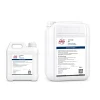
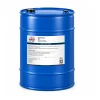
Oxygen removal and corrosion inhibition for hydrotesting
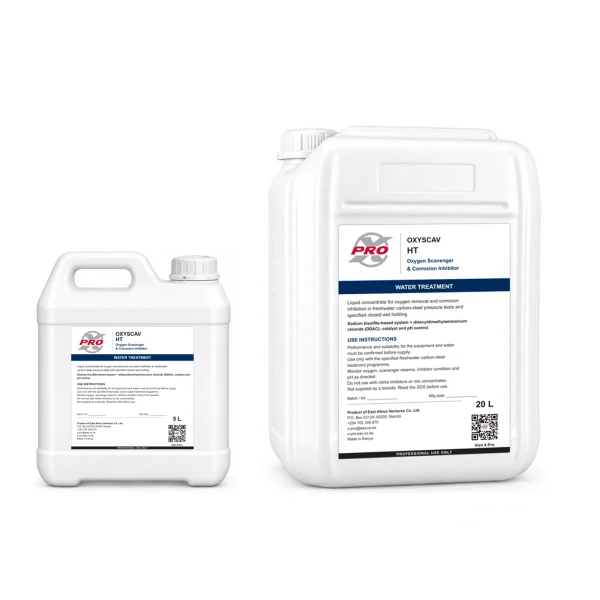
X-Pro OxyScav HT is a liquid treatment for freshwater pressure testing of carbon-steel pipes, vessels and equipment, including specified closed wet holding. It combines oxygen removal and corrosion inhibition in one concentrate where the treatment programme calls for oxygen removal.
Industries: Oil & gas / refineries; Engineering & fabrication; Chemical manufacturing; Power & utilities.
Application requirements: Follow a defined treatment and monitoring procedure for the equipment, freshwater and temperature conditions. Check oxygen removal and corrosion inhibition separately.
Treatment system
Sodium bisulfite-based oxygen scavenger and didecyldimethylammonium chloride (DDAC), with a reaction catalyst and pH control. The oxygen scavenger reacts with dissolved oxygen to form sulfate. DDAC is a quaternary ammonium component for helping limit corrosion at the steel surface.
The one-concentrate treatment includes the catalyst and pH-control components needed for the specified water and temperature conditions. It does not provide unlimited buffering for unsuitable water. Microbial control and any leak-detection dye remain separate treatment functions.
Applications
- Treating freshwater used to fill cleaned carbon-steel pipework for pressure testing.
- Managing oxygen and corrosion-control treatment while tested equipment remains water-filled in a closed system.
- Checking both treatment functions after oxygen entry or replacement of test water before replenishment.
A hydrotest checks equipment using water under pressure. Closed wet holding is the waiting period when equipment stays filled before draining or commissioning. Each stage needs a defined treatment and monitoring procedure.
Monitor both treatment functions
Water temperature, initial oxygen content, mixing and water chemistry affect oxygen removal. Allow the specified contact time at the actual test temperature and limit air entry during filling and holding.
Before use, define separate checks for dissolved oxygen and remaining scavenger, the inhibitor’s residual or other valid performance measure, and pH. A low oxygen reading or adequate scavenger reserve does not establish that corrosion inhibition is adequate.
Fresh water additions or renewed contact with air can consume scavenger without creating the same demand for inhibitor. Check both functions before redosing: repeatedly adding a combined product to replace scavenger can overfeed the inhibitor. Do not use a single treatment-reserve reading to control both.
Follow the agreed corrosion and microbial monitoring programme. Consider sulfate formed during scavenging, remaining treatment chemicals and the receiving system when planning rinsing, water handling and discharge.
Materials and use limits
This treatment is for freshwater carbon-steel hydrotests and specified closed wet holding at the agreed ambient-temperature conditions. Identify all materials in contact with the water, including valves, seals, coatings and small fittings. Do not use this grade on other metals or with seawater, brines or glycol mixtures.
Do not use with nitrite-containing inhibitors or mix product concentrates. Do not use this grade as a general boiler, steam or operating cooling-water treatment, or for drinking-water service. It does not protect dry headspaces or equipment after draining. Plan draining, drying or another preservation step separately.
Pack sizes
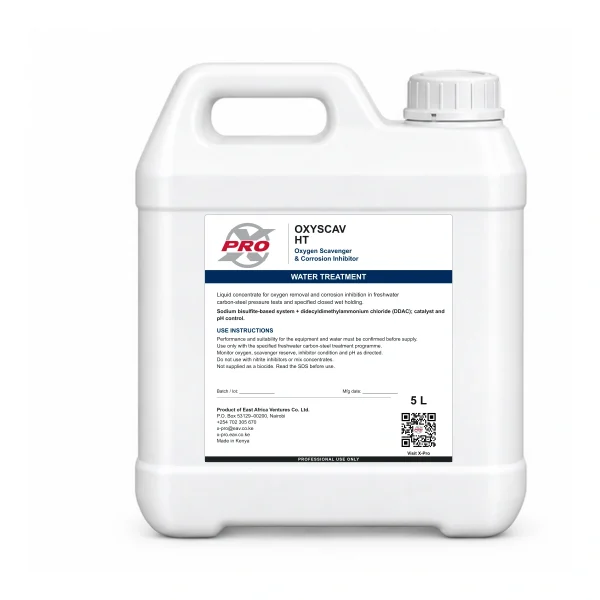
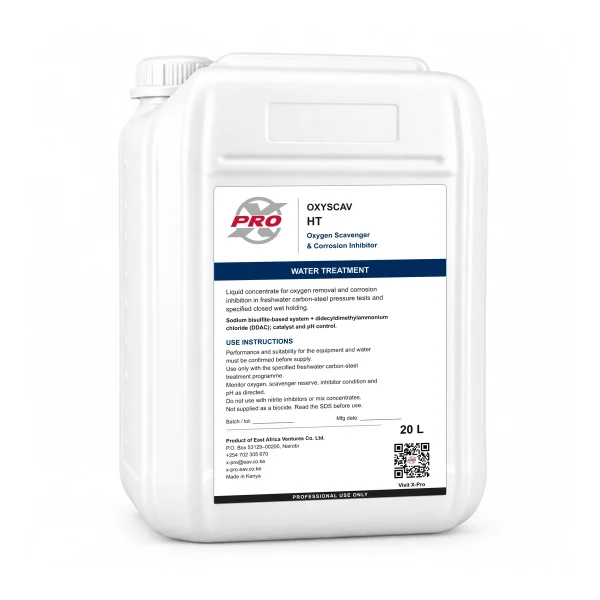
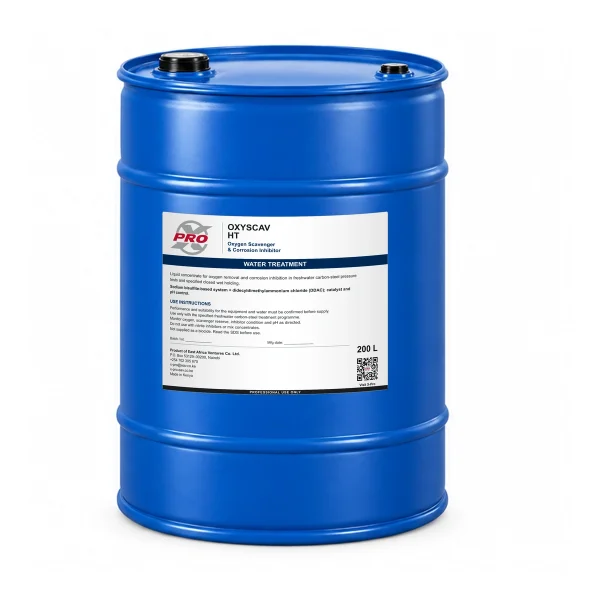
5 L, 20 L and 200 L.
Manufacturing and application support
X-Pro draws on industrial chemical formulation and manufacturing experience to match treatment to your hydrotest. Application support covers water conditions, dosing, monitoring and the expected holding period.
Frequently asked questions
How does it differ from HydroTest CI Multi?
OxyScav HT is for programmes that require oxygen removal alongside corrosion inhibition within its freshwater and carbon-steel limits. X-Pro HydroTest CI Multi follows a separate inhibitor route with its own material and water limits. Choose the treatment for the equipment, water and holding conditions. Do not combine the products automatically or mix their concentrates.
Is it a biocide?
OxyScav HT is not supplied as a biocide. Where microbial control is required, select a compatible programme and check its effectiveness alongside the complete treatment.
How much should be added, and how long can the water remain?
The treatment schedule must account for water volume, oxygen demand, steel surface area, temperature and holding conditions. Replenishment needs separate checks of the scavenger and inhibitor functions. A fixed dose or pack size cannot establish the holding period.
Request a quote
Tell us your preferred pack size and quantity.