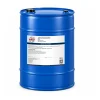
Corrosion control for closed cooling-water circuits
X-Pro CoolingGuard CL is a corrosion-inhibitor concentrate for closed cooling-water circuits containing carbon steel and copper or brass components. It is used when a cleaned system is filled for start-up and during ongoing operation.
Industries: Oil & gas / refineries; Chemical manufacturing; Power & utilities; Commercial buildings & hospitality.
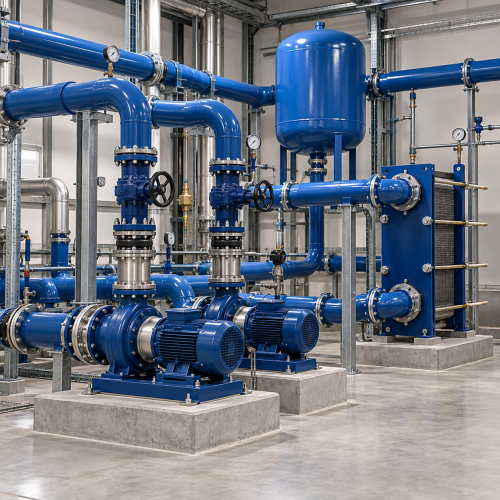
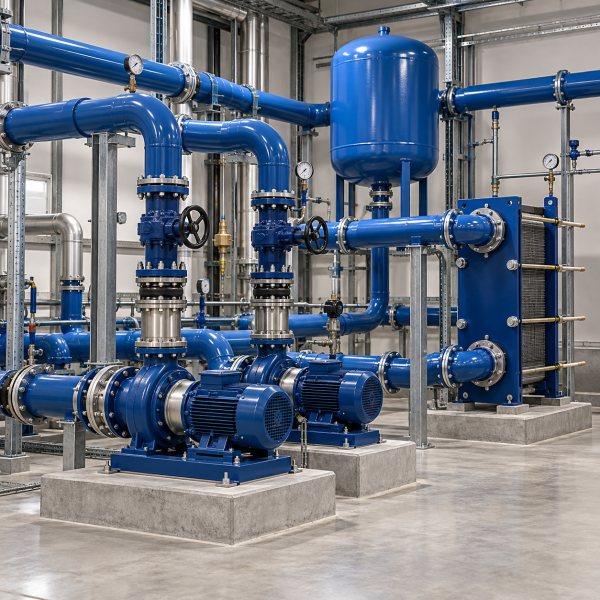
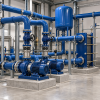
A closed circuit recirculates its cooling water through equipment and a heat exchanger. CoolingGuard CL provides a treatment route for these water-filled systems, with inhibitor levels monitored and maintained as part of the operating programme.
Application requirements: Follow the treatment and monitoring schedule for the circuit’s metals and water conditions.
Support reliable cooling-system operation
- Control corrosion where cooling water circulates: the inhibitor system targets the steel and copper-alloy surfaces inside the circuit.
- Treat from start-up: introduce the treatment after cleaning and flushing, when filling the circuit for operation.
- Keep the treatment under control: use water testing to guide replenishment after leaks, draining or water replacement.
Inhibitor system
Sodium molybdate provides the steel-corrosion inhibition component. Sodium tolyltriazole, an azole inhibitor, provides the copper and brass protection component. The concentrate combines these inhibitors with pH control in one water-based treatment.
CoolingGuard CL is mixed with the specified water; no separate corrosion-inhibitor additive is required. Microbial control is a separate part of the water-treatment programme. This product is not a biocide, antifreeze or descaler.
Applications
- Filling a cleaned, water-only equipment-cooling circuit during commissioning.
- Maintaining corrosion-inhibitor levels in industrial closed cooling-water loops.
- Treating compatible closed chilled-water circuits serving building air conditioning.
- Restoring the specified treatment level after planned draining and refilling.
For example, a plant can bring an equipment-cooling circuit into operation while construction continues elsewhere. The treatment remains part of that circuit’s ongoing water-care programme.
System requirements
Use in clean, water-only closed circuits under a defined treatment and monitoring programme. Identify the complete system metallurgy, water quality, temperature range, seals and existing treatment before selecting the programme.
Do not use this grade in open cooling towers, boilers, potable-water systems, glycol or brine circuits, or systems containing aluminium or galvanised/zinc components. Do not use in vehicle radiators or engine cooling systems. Do not mix with other treatment products without a compatibility assessment.
Pack sizes
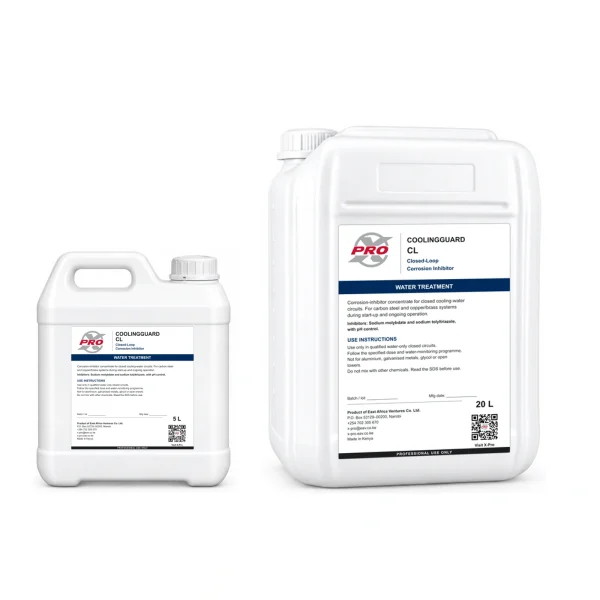
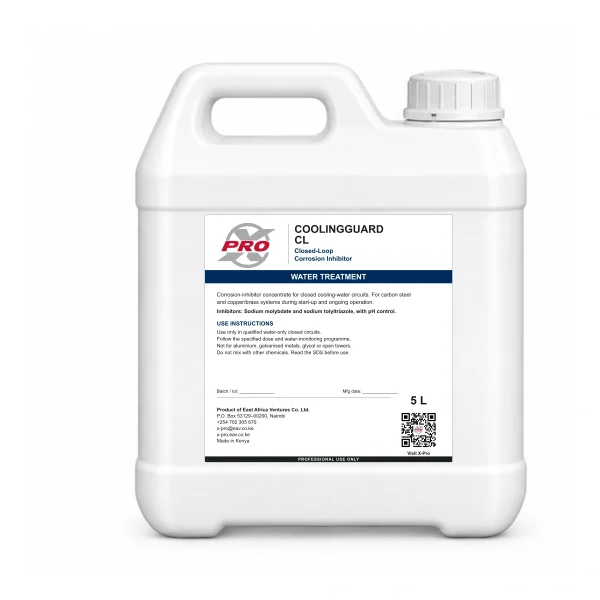
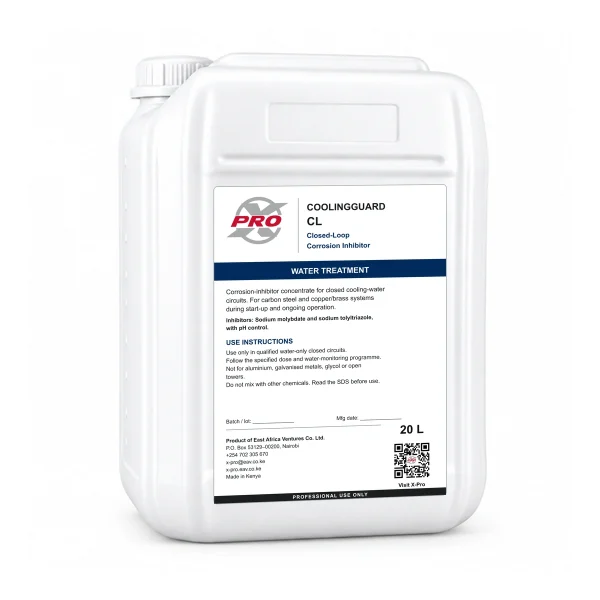
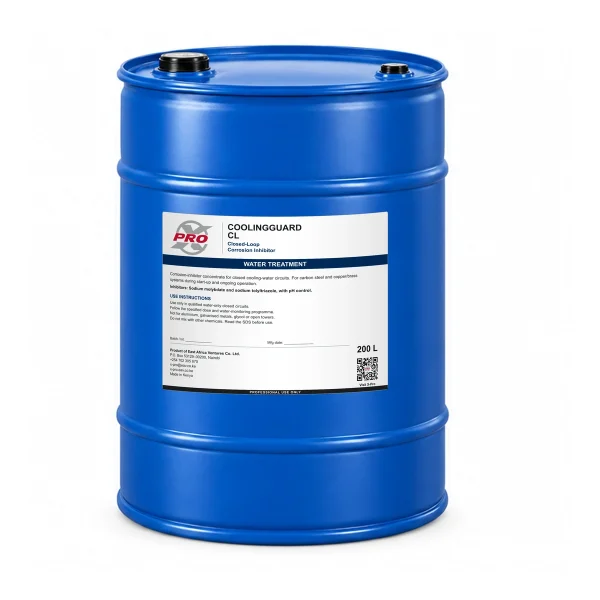
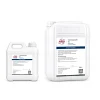
5 L, 20 L and 200 L.
Manufacturing and application support
X-Pro draws on industrial chemical formulation and manufacturing experience to match the treatment specification to your cooling circuit. Our team supports water-quality review, product selection and the monitoring requirements for your application.
Frequently asked questions
Does the whole refinery need to be completed before this product is used?
No. Treatment can begin when an individual cleaned cooling circuit is filled for commissioning and operation. Other parts of the facility may still be under construction.
How does it differ from HydroTest CI Multi?
HydroTest CI Multi addresses corrosion protection during pressure testing and specified wet holding. CoolingGuard CL addresses ongoing closed-circuit cooling-water treatment. A change between treatments requires a defined cleaning, flushing and water-treatment procedure; they are not automatically interchangeable.
Can it be used in a cooling tower?
This grade is for closed water circuits. Open cooling towers have different evaporation, water-quality and microbial-control requirements and need a separate treatment programme.
Does it remove rust or kill bacteria?
No. Clean and flush the circuit before treatment. Assess microbial control separately and use only a compatible programme. Corrosion-inhibitor treatment does not remove the need for microbiological monitoring.
How much product should be added?
The dose and control limits depend on the supplied grade, circuit volume, water quality and system materials. Follow the written treatment schedule and measure inhibitor levels during operation.
Request a quote
Tell us your preferred pack size and quantity.