Alkaline cleaner for circulation cleaning
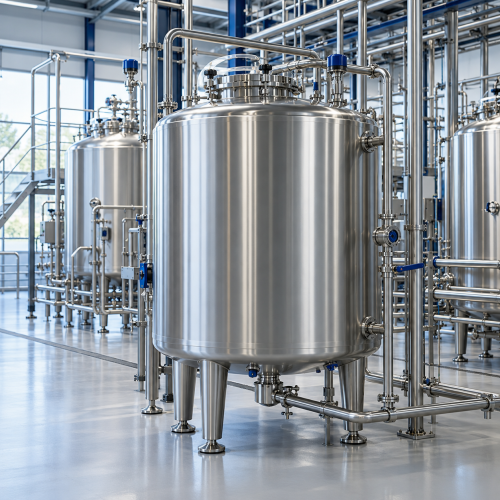
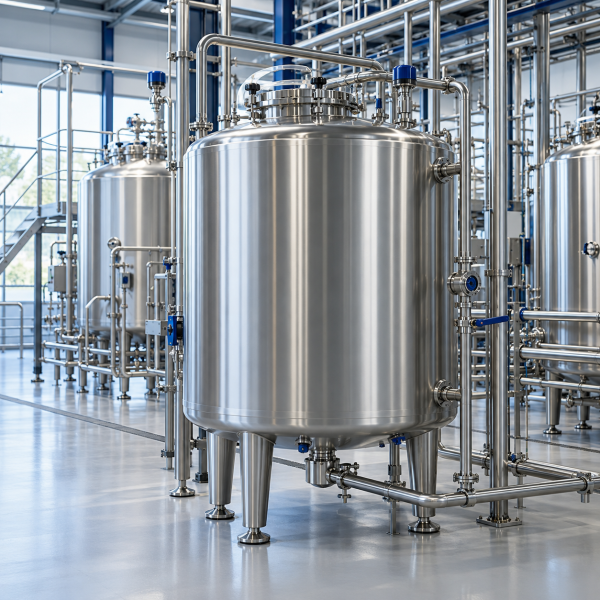
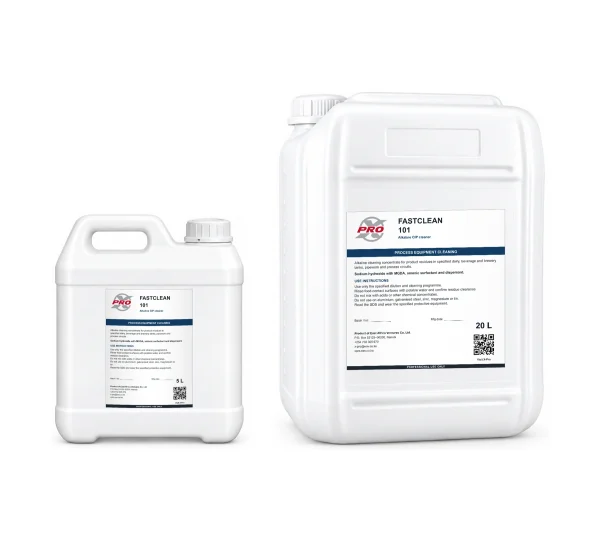
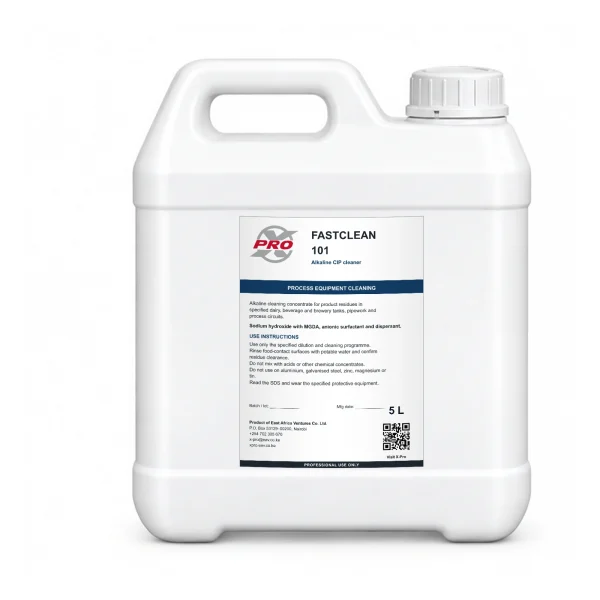
X-Pro FastClean 101 is an alkaline cleaning concentrate for removing organic product residues from specified dairy, beverage and brewery tanks, pipework and process circuits. It combines alkali for cleaning residues with ingredients that wet surfaces, control water hardness and keep loosened particles in the wash solution.
Industries: Dairy processing; Beverage production; Brewing.
Key ingredients
- Sodium hydroxide: provides alkalinity for cleaning organic residues.
- Methylglycinediacetate (MGDA), as its trisodium salt: binds calcium and magnesium ions that can interfere with cleaning.
- Low-foam polycarboxylated anionic surfactant: provides wetting for circulation cleaning.
- Acrylic dispersant: helps keep loosened particles dispersed during cleaning.
The cleaning system addresses duties where plain sodium hydroxide needs added wetting and hardness control. It does not replace an acid stage for mineral deposits or a separately specified disinfection stage.
Applications
- Dairy processing: the alkaline cleaning stage for milk-product residues in specified tanks, lines and process circuits.
- Beverage production: cleaning product residues from specified mixing tanks, storage tanks and transfer lines.
- Brewing: alkaline cleaning of specified tanks and process lines under the brewery’s equipment-specific programme.
Heat-treated deposits, persistent mineral scale and recovered cleaning solutions need particular attention when selecting the cleaning programme.
Using FastClean 101
Remove or protect food and food-packaging materials before chemical cleaning.
Follow the specified dilution, water quality, temperature, circulation time and dosing procedure for your equipment. After cleaning, rinse surfaces that contact food with potable (drinking-quality) water. Before restarting production, complete your site’s checks for remaining cleaning chemicals.
Do not mix with acids, hypochlorite, peroxide or other chemical concentrates. Before caustic cleaning of brewery vessels, follow the equipment maker’s procedure to remove carbon dioxide and prevent damage from vacuum.
Do not use on aluminium, galvanised steel, zinc, magnesium or tin. Check that the cleaning procedure is suitable for the stainless-steel grade, welds, seals and surface finish. Follow the safety data sheet (SDS) and product handling instructions.
Pack sizes
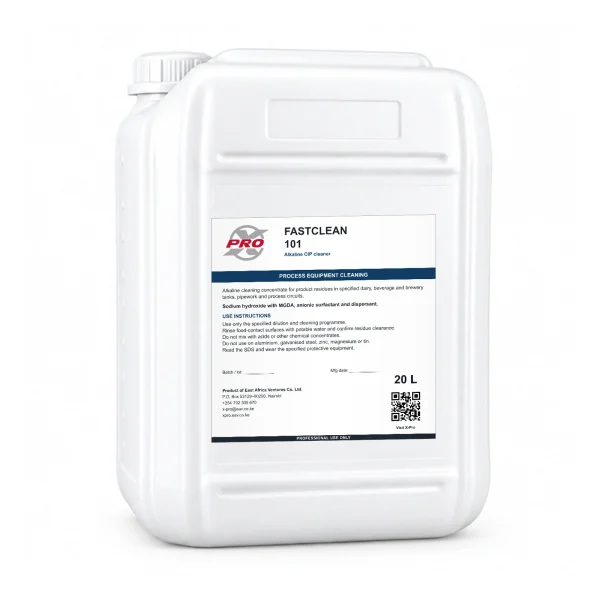
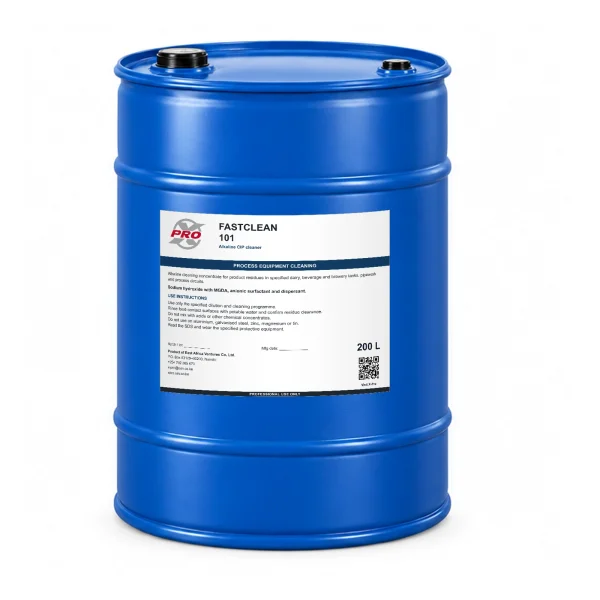
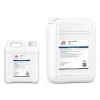
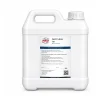
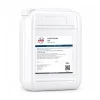
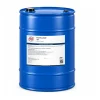
Pack sizes: 5 L, 20 L and 200 L.
Frequently asked questions
Why combine sodium hydroxide with MGDA and a surfactant?
Sodium hydroxide supplies alkalinity. MGDA binds hardness ions, while the surfactant wets surfaces and residues. A dispersant helps keep particles in the wash solution. Plain caustic may be sufficient for some duties; the added ingredients are useful where water and soil make cleaning more demanding.
Is FastClean 101 low foam?
It uses a low-foam surfactant. Check how the complete cleaning solution foams in your equipment during cold starts, heating and reuse; the surfactant alone does not determine foam levels.
Does 101 describe the concentration or dilution?
No. It is a product identifier. The supplied specification and approved application instructions define concentration and dilution.
Does it disinfect the equipment?
No disinfection claim is made. Cleaning removes soil; the plant programme must separately specify any required chemical or thermal sanitation.
Can it be used for bottle washing?
Bottle washing requires a separate assessment of the washer, container material, labels and adhesive, foam, carryover and rinsing. A CIP application does not establish bottle-washing suitability.
Can it be added to Caustic 50?
FastClean 101 is a formulated cleaner, not a separate caustic booster. Do not combine concentrates or supplement a cleaning bath without a specified programme.
Request a quote
Tell us your preferred pack size and quantity.