Carbon-steel passivation after chemical cleaning
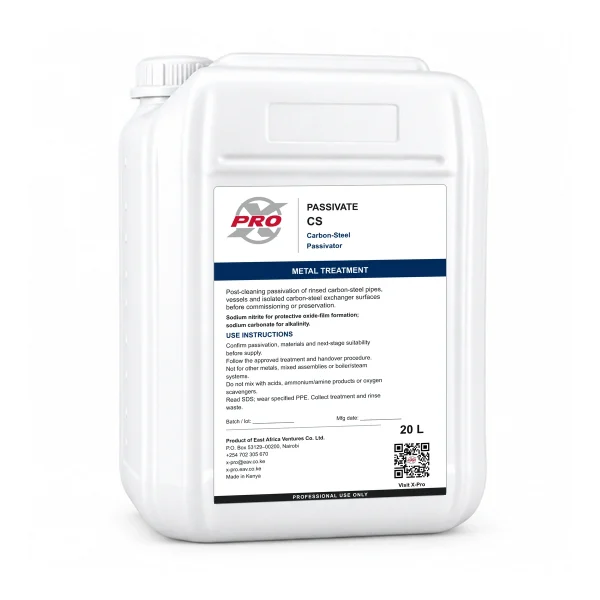
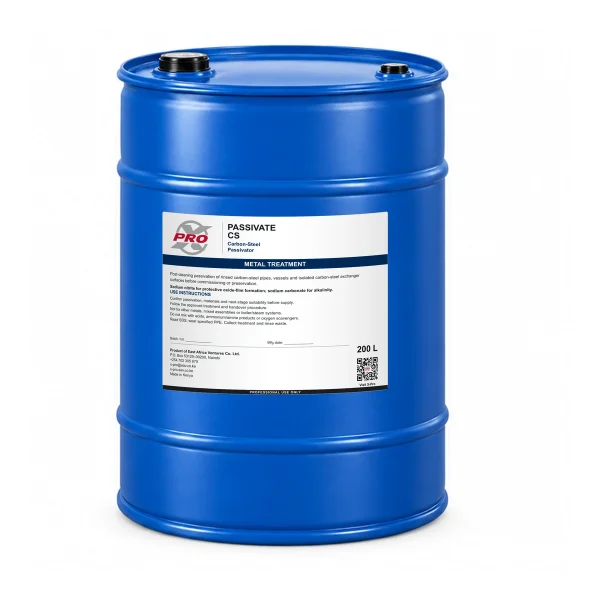
X-Pro Passivate CS is a liquid concentrate for passivating cleaned and thoroughly rinsed carbon-steel pipework, vessels and isolated carbon-steel heat-exchanger surfaces before commissioning or a separate preservation treatment. It combines sodium nitrite for formation of a protective oxide film with sodium carbonate to provide the alkaline conditions for treatment.
Industries: Oil & gas — carbon-steel auxiliary equipment; Chemical manufacturing; Engineering & fabrication.
Application requirements: Use a defined post-cleaning treatment procedure for ordinary carbon steel, including draining, any final rinse, drying where required and the next commissioning or preservation stage.
Passivation system
Sodium nitrite and sodium carbonate are included in one aqueous concentrate. Sodium nitrite promotes a protective oxide film on prepared steel. Sodium carbonate supplies alkalinity. The treatment requires uniform contact with the cleaned surface and separate monitoring of nitrite and alkalinity; a satisfactory chemical reading alone does not establish that passivation is complete.
Applications
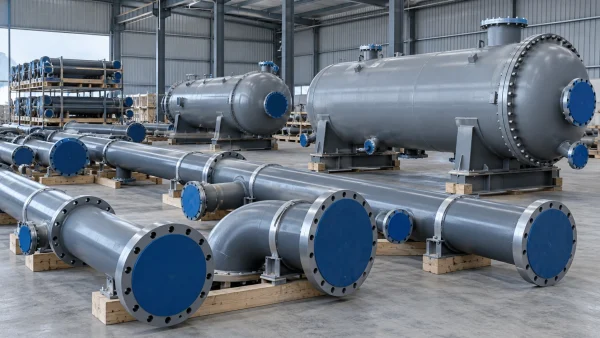
- New pipework and vessels: post-cleaning passivation before the specified commissioning or preservation stage.
- Maintenance and repairs: treatment of cleaned carbon-steel equipment or replacement sections before return to service.
- Heat-exchanger maintenance: treatment of isolated carbon-steel surfaces where all wetted parts meet the procedure’s material requirements.
Passivate CS follows cleaning and rinsing; it does not remove oil, rust or scale. A separate passivation step is not necessary after every cleaning job. Select the treatment sequence for the equipment and its next use.
Controlled treatment and handover
Use only under an approved procedure covering surface preparation, water quality, chemical monitoring, circulation, temperature, contact time and acceptance of the treated surface. Confirm removal of incompatible cleaning residues, including trapped residues in low points. Do not use Passivate CS to neutralise spent acid.
The procedure must also specify draining, any final rinse, drying where required and the permitted delay before service or preservation. Passivation does not provide a guaranteed storage period. Keeping equipment filled or storing it drained requires a separately specified protection programme.
Do not mix with acids, ammonium or amine products, oxygen scavengers or other chemicals. Do not add more concentrate solely to restore one depleted component. Follow the safety data sheet and specified protective equipment, and collect treatment liquid and rinse water for controlled treatment or disposal.
Materials and use limits
For assessed ordinary carbon steel. Do not use on other metals or mixed-metal assemblies, including aluminium, zinc/galvanised steel, copper/brass, stainless steel and cast iron. Check the steel grade, welds, seals, coatings and temporary circulation equipment before treatment.
Not for boiler or steam systems, high-alloy or high-strength steels, potable-water or food-contact equipment, oxygen service, high-purity service or reactive-monomer service. Passivate CS does not repair pitting or provide permanent corrosion protection.
Pack sizes
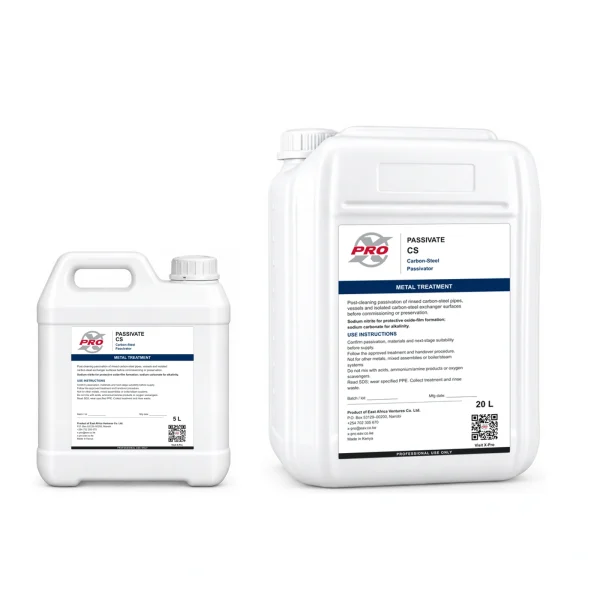
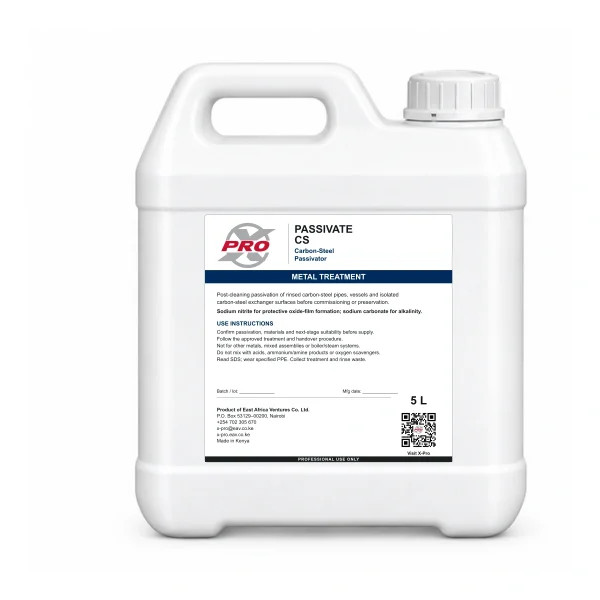
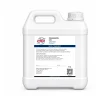
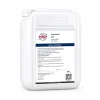
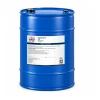
5 L, 20 L and 200 L.
Manufacturing and application support
X-Pro draws on industrial chemical formulation and manufacturing experience to match treatment chemistry to the equipment and task. Application support covers preparation, material limits, water quality, monitoring and the transition to service or preservation.
Frequently asked questions
What does passivation do to carbon steel?
It promotes a protective oxide surface after cleaning. The result depends on the steel, preparation and controlled treatment conditions. It does not turn carbon steel into stainless steel or protect it indefinitely after the treatment liquid is removed.
Why combine sodium nitrite with sodium carbonate?
Sodium nitrite supplies the passivating action; sodium carbonate supplies the alkaline medium. Including both in the concentrate simplifies the initial addition. Their levels still need separate monitoring because nitrite consumption and alkalinity changes do not necessarily occur together. Separately dosing the two chemicals allows independent adjustment; the choice depends on water quality, chemical demand and treatment controls. Any correction must follow the approved procedure.
Is it the same as HydroTest CI Multi or PreserveGuard?
No. X-Pro HydroTest CI Multi addresses fresh-water pressure testing and equipment kept filled with treated water. X-Pro PreserveGuard addresses temporary preservation of clean, drained, enclosed carbon-steel equipment. Passivate CS addresses a separate post-cleaning surface-treatment stage. Choose the product for the required outcome; do not combine treatments or apply an amine preservative over nitrite residues without a separately verified transition procedure.
Can I use it instead of Passivate SS?
No. X-Pro Passivate SS uses citric acid for contaminant-iron removal from precleaned 304 and 316L stainless steel. Passivate CS uses an alkaline nitrite treatment for carbon steel. The products are not interchangeable.
Can it replace CoolingGuard CL?
No. X-Pro CoolingGuard CL addresses continuing corrosion control in its specified closed cooling circuits. A cooling-water programme may provide the required startup protection without a separate Passivate CS stage. Check the complete commissioning programme rather than adding another treatment automatically.
Can I add it directly after acid cleaning or oxygen-scavenger treatment?
No. Complete the specified separation and rinsing, and verify compatible conditions before introducing Passivate CS. Acid, ammonium, amine and oxygen-scavenger residues can interfere with the treatment or create hazardous reactions. A bulk pH check alone does not establish a safe transfer.
Request a quote
Tell us your preferred pack size and quantity.